עמוד בית
- עדויות
- פעילויות
- מדיה ותוכן
- אנחנו



 עדויות
  מדיה ותוכן
ש"ח
אירו
דולר
פאונד
מדיה ותוכן
ש"ח
אירו
דולר
פאונד המחאות לפקודת "שוברים שתיקה" ניתן לשלוח ל:
"שוברים שתיקה"
ת.ד. 51027
ת"א 6713206
ניתן לבצע העברה בנקאית לחשבוננו:
חשבון 340211 בסניף 567 (בית אסיה) בבנק הפועלים
ניתן להעביר תרומה דרך החשבון שלנו ב"קרן החדשה", לקבלת זיכוי מס על תרומות בארה"ב: לחצו כאן
לזיכוי מס באירופה צרו עמנו קשר במייל info@shovrimshtika.org







 ש"ח
אירו
דולר
פאונד
חד פעמי
חודשי
ש"ח
אירו
דולר
פאונד
חד פעמי
חודשי המחאות לפקודת "שוברים שתיקה" ניתן לשלוח ל:
"שוברים שתיקה"
ת.ד. 51027
ת"א 6713206
ניתן לבצע העברה בנקאית לחשבוננו:
חשבון 340211 בסניף 567 (בית אסיה) בבנק הפועלים
ניתן להעביר תרומה דרך החשבון שלנו ב"קרן החדשה", לקבלת זיכוי מס על תרומות בארה"ב: לחצו כאן
לזיכוי מס באירופה צרו עמנו קשר במייל info@shovrimshtika.org


באזור דרום הר חברון מיוצגת מערכת היחסים המורכבת בין הצבא, המתנחלים והפלסטינים. בסיור, נבקש להציג מערכת יחסים זו.
מרץ | ||||||
|---|---|---|---|---|---|---|
| 01 | 02 | |||||
| 03 | 04 | 05 | 06 | 07 | 08 | 09 |
| 10 | 11 | 12 | 13 | 14 | 15 | 16 |
| 17 | 18 | 19 | 20 | 21 | 22 | 23 |
| 24 | 25 | 26 | 27 | 28 | 29 | 30 |
| 31 | ||||||
 אפריל אפריל | ||||||
|---|---|---|---|---|---|---|
| 01 | 02 | 03 | 04 | 05 | 06 | |
| 07 | 08 | 09 | 10 | 11 | 12 | 13 |
| 14 | 15 | 16 | 17 | 18 | 19 | 20 |
| 21 | 22 | 23 | 24 | 25 | 26 | 27 |
| 28 | 29 | 30 | ||||
| מאי | ||||||
|---|---|---|---|---|---|---|
| 01 | 02 | 03 | 04 | |||
| 05 | 06 | 07 | 08 | 09 | 10 | 11 |
| 12 | 13 | 14 | 15 | 16 | 17 | 18 |
| 19 | 20 | 21 | 22 | 23 | 24 | 25 |
| 26 | 27 | 28 | 29 | 30 | 31 | |
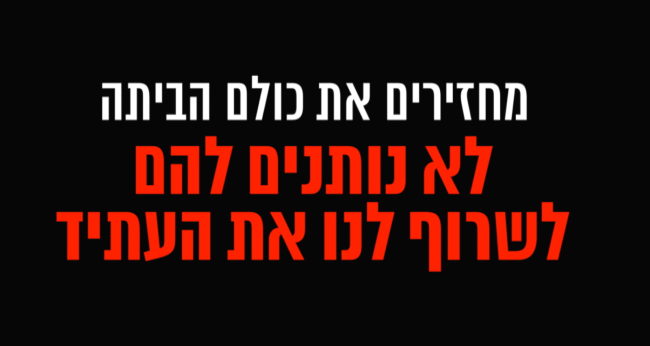
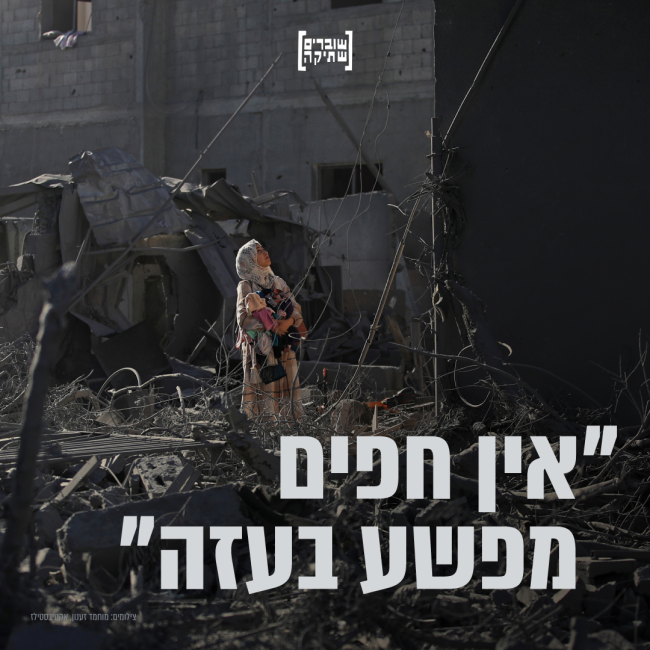
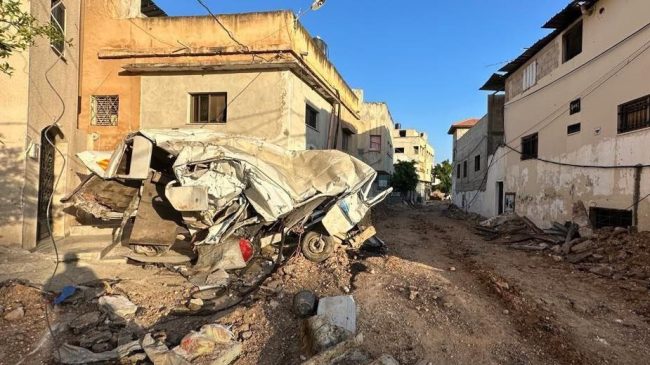
יש אנשים שעבורם ההלם והטראומה של ה-7 באוקטובר הם לא יותר מהזדמנות להקים וילה בחאן יונס. אסור לתת להם להטביע אותנו בבוץ ההתנחלויות בעזה. אסור להישאר בעזה. מחזירים את כולם הביתה.
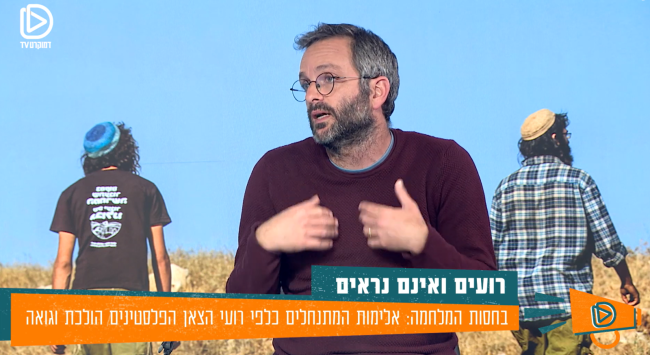
המיצב, שדימה קברים טריים, נועד למחות נגד תמיכת הממשלה בטרור המתנחלים. הפעיל, נדב וימן, סיפר כי במהלך החקירה הבין שהמשטרה השתמשה במערכת עין הנץ המזהה לוחיות רישוי כדי לאתרו. "מדהים כמה המשטרה מתאמצת כשזו לא אלימות מתנחלים", אמר
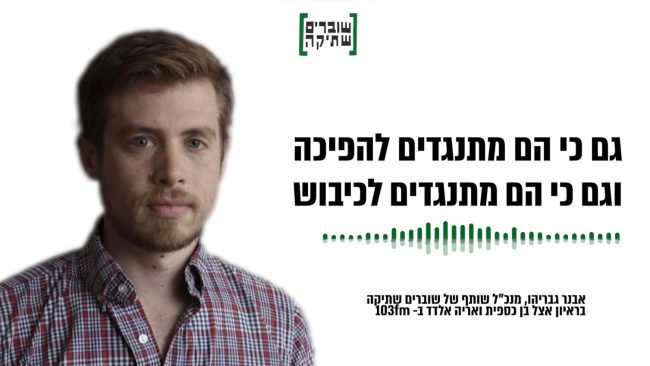
"הכוח של המחאה הזו הוא כוח של מגוון. אני מגיע באופן קבוע גם לירושלים וגם לתל-אביב ואני יודע שכמוני רבים ורבות מגיעים גם כי הם מתנגדים להפיכה וגם כי הם מתנגדים לכיבוש". אבנר גבריהו, מנכ"ל שותף של שוברים שתיקה, ניסה להסביר לבן כספית למה המאבק בכיבוש הוא חלק בלתי נפרד מהמחאה הזו. בימים הספורים שחלפו מאז ראינו איך הגוש נגד הכיבוש בהפגנות רק גדל והלך.
השבוע נפתר מאבק פנימי, סמוי ברובו, שמתרחש כבר חודשים באוניברסיטת בר אילן סביב שאלה הרת גורל – האם לאפשר ל"שוברים שתיקה" לדבר בקמפוס. האוניברסיטה הודיעה לפני כמה
אבנר גבריהו, מנכ"ל 'שוברים שתיקה', על הרפורמה המשפטית שמובילה הממשלה: "רוצים לרסק את בג"ץ - ולמה? בין היתר, כדי להמשיך את הסיפוח"
 22 02 03
ההרשמה למחזור החמישי של מדרשת דרור עומדת להסתיים, ונותרו עוד מספר מקומות אחרונים בלבד. מדרשת דרור היא מדרשה פוליטית-אקטיביסטית, לצעירים וצעירות...
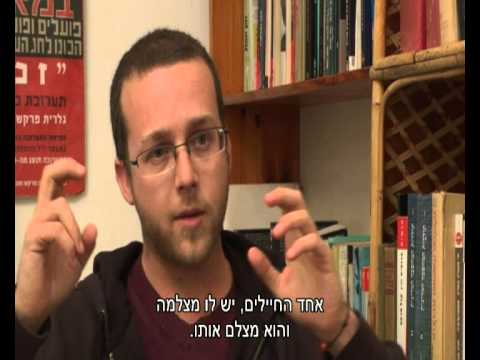
 עדות וידאו
מספר קטלוגי: 36876
יחידה: נח"ל
דרגה: סמ"ר
אזור: חברון
תקופה: 2004-2007
הייתי במעצר אחד [של] גנב עטים, משהו הזוי. עצרנו בן אדם והבאנו סחורה, לא יודע כמה היה שם, 4-5 ארגזים של...
דרגה: רס"ל
יחידה: נח"ל 50
אזור: חברון
אתה נכנס לבית, סתם משפחה, ואתה רואה את המבט הזועם של הילד הזה. ואתה יודע, אתה לא אידיוט. אני חושב שאין...
דרגה: סמ"ר
יחידה: צנחנים
אזור: אזור שכם
נכנסים לבית אחרי שלקחנו תעודת זהות למשפחה ושמים אותם בחדר ושמים שני חיילים ששומרים על המשפחה. שלושה חיילים...
דרגה: סמ"ר
יחידה: נח"ל 50
אזור: אזור שכם
כשאתה אומר לחייל: בוא ניכנס לבית כדי שסתם תכיר אותו, אז זה מעלה הרבה יותר שאלות. אתה מתחיל לשאול את עצמך...
דרגה: סרן
אזור: חברון
© כל הזכויות שמורות ל"שוברים שתיקה".
מעל 50% מתקציבנו בשנה החולפת הגיע מ"ישויות מדיניות זרות". 100% מהעדויות שלנו הגיעו אלינו מחיילים וחיילות ששירתו בשטחים הכבושים.
 מדיניות פרטיות ותנאי שימוש