Name: *** Rank: first sergeant Unit: Nachal elite unite Description:Was there anything that seemed unreal to you on this reserves tour of duty?
Everything. It all seemed unreal to me. There's no need to harass the Palestinian population like that. These checkpoints. There's something called 'questioning'.
You stop someone on the street and ask them questions. God knows why. You're riding in a patrol car through Huwwara village, you see two people and call the over to you, begin talking to them in your stuttering Arabic, in your spoken "occupationese", take their ID numbers and pass them on for a check, ask them where they live, what they're doing here, what their work is, take their IDs from them, detain them a little. We did it once for practice, and then I never did it again. There' also mapping where you enter houses or a neighborhood or a market and ask whose stall this is, why is he not here, what does he sell, where does he get his goods. I think this is mostly done to harass them.
This is all written in reports and passed on to military intelligence?
Yes. It's all written. But the problem is that the recon-battalion before us has done the same about 900 times, and we do it another 3-4 times. So I don't see the point.
Name: *** Rank: first sergeant Unit: Nachal elite unite Description: Beita Tahta and Beita Foqa, these are the most dangerous villages in the area. They are not situated along a main road. Every time you went in there you'd get Molotov cocktails thrown at you, and paint cans which is something new, I don't know if you're familiar with that. I wasn't. So Molotovs, paint cans, and stones every time you'd enter the village. Common sense says that they're situated five kilometers from the road, there's no reason to go in there. No. It was decided to enter the two villages. One vehicle enters, gets fired at, another vehicle goes in, seeking to take down knees.
What do you 'fired at'? You just talked about Molotovs and paint cans, not shooting. We'd shoot. He was supposed to sustain the Molotovs and paint cans, and the second one – it's a real operational thing, you're recon, you're supposed to be highly operational – the second jeep would stop some ways away, and with a sniper rifle, from about 100 meters which is a joke, look for knees to shoot at. First time it happened, they went through various knees, and shot one. But he didn't know for sure if that knee belonged to the person who threw the Molotov, or the stones, or was that someone else. The open-fire instructions say aim for the knees of Molotov as well as stone throwers for they both endanger you. The second time this happened, they entered again, there were Molotovs thrown again, a door was in flames, it was really crazy. He'd already taken down four knees. The first knee was of a 14-year old boy, something like that.
Who was then given medical attention?
I think so. Yes, an ambulance came. It took time, but a Palestinian ambulance did arrive and took him away. The second time, there were four knees of young boys.
I can't tell you whether these were 18-19 year-olds, or 13-14 year-olds. The problematic age groups when you identify them through the sniper's sights. And I wasn't present, anyway. I was at Tapuach Junction when that happened, so I can’t say for sure. But that's what went on. Reserves.
Rank: Staff Sergeant Unit: Nachal 931 Place of incident: Hebron Description:
May-June 2004
The moment I realized that what I used to think was out of the ordinary was actually rather ordinary was during one of my last guard-duties in Hebron, before I completed my military service. I was guarding with a guy from the company, not one of the officers, and, he told me a story, trying to explain why he didn’t consider himself among those who abuse, and why he [could think he] used force and violence only when necessary.
He told me a story about a patrol he was on, and this story was an example of why he didn’t use force. He was on the patrol with an officer. You know the patrols – stopping the cars, sometimes confiscating the vehicles, sometimes delaying the people.
When you stop a car – when you’re on patrol, when you’re at a checkpoint or anywhere else – you set the rules. You have the weapon, so you set the rules. So he said to the people: “No speaking on cellular phones.” One of the Arabs in the car was on the phone and signaled that he was just finishing up the call and would be off in a second.
And the guy who telling me the story paused, and asked me: “Do you understand?! Do you understand that the Arab signaled with his hand and told me to wait a second?! So of course I put the gun barrel to his ribs.” That incident took place right in front of an officer.
The guy telling the story had this look of amazement in his eyes that a person, an Arab, and older person, dared to signal with his hand while talking on the phone, so he placed the gun barrel to the guy’s ribs.
That was the story that brought to my attention that what I used to think was out of the ordinary is actually quite ordinary.
Rank: Sergeant Unit: Nahal brigade Place of incident: Ramallah Description: Did you catch people, delay people, when they drove during curfew?
Yes, yes, many times. We would start arguing with them, we would chase someone with an Armored troop Carrier because we saw him driving during curfew. We would stop in front of them and arrest them. [We would] take their keys, like we had done before – even when I was new in the army – take their keys, tell them “go home”. You see? And we wouldn’t confiscate [the car]. We would leave the car there, in the middle of Ramallah, doesn’t matter where; “go home”. Your keys are taken. As a rule, in that patrol, if that officer remembered the car, going there [during curfew] for the second time, they would arrange [the drivers] in a line, and I don’t know what.
What ?
Put them in a line, I’m telling you, there was no physical violence towards them. I remember all those times. I really remember that they wouldn’t beat them with gun handles and all that. I hear stories [about such cases]. Let’s say this was the rule [as far as what I’ve witnessed]. It didn’t happen a lot, but they would put them in a line and yell at them. Once someone gave them a kind of military inspection, as if they were soldiers “You’re not keeping up with the schedule” and all that, doing this to Arabs, to Palestinians, “This is the last time you…”, you know.
What do you mean? Arranging them in lines?
Yes, and yelling at them like drill sergeants do: “You’re fucking with me?!”.
“You’re this, You’re that”. And they haven’t got a clue as to what he’s yelling about. They don’t get it. And that’s what they did to them. And they would confiscate their cars.
Rank: Second Lieutenant Unit: Artillery Corps Description: One day one of the officers, either the Company Commander or the Deputy Company Commander, drove inside a village – a godforsaken village deep in the occupied territories, in the middle of nowhere. I was in the other vehicle, suddenly he stops at the center of the village and comes out without a helmet or anything. I don’t get it, why did he come out? Maybe something happened. I watch him approach two kids who were sitting in the doorway of one of the houses. I come out. I thought something happened and I see him screaming and hitting them, he Kicked one of them with his knee, punched him in the stomach. I’m in shock. I don’t understand what’s going on. And then he walks away. I try to understand and ask: “What happened?” He says: “They cursed me.” This officer is my commanding officer. I told it to the other division commander who was with me [in the car]. I don’t know how he could hear inside the car that they were cursing him. He just flew into rage. I don’t know whether they cursed him or not, what matters is the sense of power people get here – that you can do whatever you wish, and wherever you wish, as long as they’re Arabs.
Did you report this incident?
It was an exceptional case. The man’s an idiot, what can I do about it? Like, go tilt at windmills.
Rank: First Sergeant Unit: 401 brigade, armour forces Place of incident: Rammallah Description:
March 2002, the second entrance of I.D.F to Ramallah
Acting on the orders of his commander, a tank driver rolled over three expensive cars in Ramallah. The tank behind him also went over the same three vehicles. Not one of the members of the tank crews said anything to the tank commanders about what had happened. A week later the same commander delivered a lecture to his platoon on “Purity of Arms”.
Rank: First sergeant (res.) Place of incident: Streets in Bethlehem Description:
July 2002
While on a routine patrol in an armored troops carrier in the streets of Bethlehem, to cast and enforce curfew, I, as the carrier driver, get an order to get off the road to the sidelines in order to run over a Palestinian vehicle, parked on the side of the road. The reason was simply, “it is not parked well”, as the patrol commander, platoon vice commander, Lieutenant ***, defined it. It should be noted that the vehicle was parked in a permitted area (not that we are with the police or anything), it didn’t obstruct the traffic, and the road was wide enough for other vehicles – much wider than an armored troops carrier – could pass through without a problem. To get to this vehicle I really had to get off the driving course and get to the sidelines. I did not obey this order, and simply got back to the road.
Rank: Staff Sergeant Unit: Regiment 50, Nahal brigade Place of incident: Hebron Description: During a patrol in Hebron, children threw stones at us. The commander of the force ordered one soldier to break the windshield of a nearby car which had nothing to do with the
children. We ended up breaking all the windshields
Date: 6/29/2002 Rank: first sergeant Unit: 450th battalion (class commander schoool) Place of incident: Daheisha Refugee camo Description: We were on patrol enforcing curfew in Bethlehem and Daheisha during operation', "decisive path".
Our rules of engagement were as follows:
First stun grenades and tear gas and if they continue to throw rocks, shoot at them rubber bullets from a long distance and to the legs.
During our post I noticed that the runner was separating the rubber bullets (rubber bullets are shot in threes wrapped in nylon in order to soften the blow. Separating the bullets gives them the effect of live ammunition), something which is illegal. I challenged him and a yelling match followed, where I said that a rubber bullet can kill and it is against the law. It turned to an hour long debate between all of those in the APC, where everybody sided with the runner and called me weak and so on.
When we returned to the tents I discussed this with someone from another platoon who told me that their sergeant hit a kid in the jaw earlier that day with a rubber bullet from a very short range. Later we found our that that boy was killed and I used that story to prove my comrades wrong.
Rank: First Sergeant Unit: Paratroopers brigade Place of incident: Nablus Description:
End of 2003
Let’s start with the things you want to tell, the things lying heavy on your heart. I ask you to tell everything, what happened, how you felt, what do you think now… What disturbs me most, and what bothers me most is the lack of value of human life in the OT (occupied territories).Of course not that of Israelis. When my friend was killed, I caught myself suddenly saying ‘Wallah’ (exclamation of surprise) here’s a man gone, in the middle of his life. A person who’s life has stopped. All the aspects of a human being: his aspirations, what he was, what he said, the happy moments of his life, his friends. A man’s life has lots of aspects, and all of a sudden, everything stopped. And then it dawned on me that this was the death of a human being and that you start thinking ‘Wallah’ what about all these people we killed ? And my team killed….innocent people, or at least apparently innocent people. Some were killed by mistake, really by mistake. But what’s a mistake? Really—say ‘we are sorry’. We killed your husband, your daughter, your child or your grandfather or whoever else. And there were those executed on orders that, in my opinion, were illegal. As I told you, the most disturbing thing to me is that there is an absolutely Wild West in the OT. Brigade Commanders, Regiment Commanders and Company Commanders do whatever comes to their mind. No one checks them, and no one stops them. We got in- for many nights in the (Nablus) casbah - and our firing orders were: between 2 to 4(AM) anybody spotted in the casbah, is doomed to die. These were the words: ‘doomed to die’. Who spoke these words ?
Words we heard from the CC (Company Commander) in the briefing. The CC gave us a briefing before every mission. Sometimes he said between 2 and 4 whoever wanders around the casbah is doomed to die, or sometimes between 1 and 3: doomed to die.
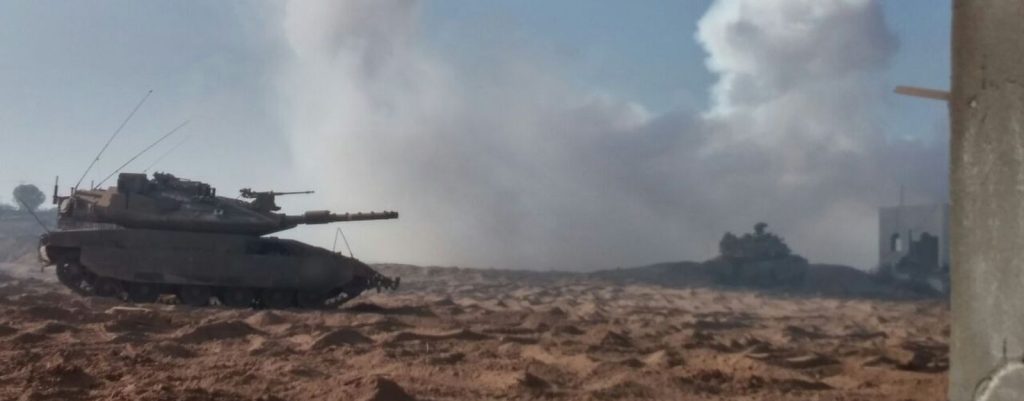
Our team entered (the casbah) and took over a building. From this building we advanced in a worm-like fashion, you know, blowing up a wall, going from house to house, blowing up another wall and entering another building. Like a worm, in the casbah and at Balata (refugee camp), that are highly crowded areas, avoiding crossing the alleys that were a ‘killing zone’. Whenever you crossed one of these alleys your chances of coming out alive were not good. Therefore we developed a tactic of avoiding the alleys altogether and passing through walls of buildings. As buildings are very close to each other, and have mutual walls. So you take a dynamite brick, attach it to a wall, explode it, and climb through the hole in the wall. This is a very slow advance. When you reach a strategic building, commanding its surroundings, you set up a post there to observe the surrounding alleys and roof tops. What do you do with the family in the ‘strategic’ building?
I know all the stories, and heard from here to eternity about the non-human treatment of these families, and all sorts of plunder. I want to state here for the protocol that in my unit there wasn’t anything like it. We were always… we blew a hole in a wall, we entered homes, we gathered the entire family, not by shouting, but quietly. We tried to calm them down. Placed them in a room, we locked them up and placed a guard. Every time they had to use the toilet, they asked us, and they did with someone accompanying them. We moved furniture aside, sat on the floor, took up positions, built MG and sharpshooter positions in the highest windows or rooftops. This means that destruction of a house entered by our forces only meant destruction of only a wall? Yes, in the operation ‘Defensive Shield’, only destruction of a wall. After that things changed. During ‘Defensive Shield’ we cleaned up houses. The houses we left were cleaned. We made sure to clean it. That was the way with my team.
[….]
I don’t remember how long it took to conquer the entire casbah, maybe a week, maybe two. It happened during the battle of the casbah. We entered, continued advancing in the ‘worm fashion’, took over a strategic building, set up positions there, and one of the sharpshooters identified a man on the roof. The man was on a roof about two roofs away from us. I think he was between 50 to 70 m from the sharpshooter. Unarmed, I looked at the man with a night vision binocular. He was unarmed. It was 2AM: an unarmed man on a rooftop, turning around. We reported it to the PC (Platoon Commander) who ordered ‘Take him down’. He (the sharpshooter) shot and took him down. The PC, in a radioed message, actually sealed the man’s fate to die. An unarmed man! Did you see that he was unarmed? I saw with my own eyes that the man was unarmed. He (the sharpshooter) also reported… the report said: ‘an unarmed man on the roof’. The PC interpreted it that the man was an observer. He interpreted that the man was an observer, meaning the man was not directly threatening us, and he ordered us to shoot the man and we did it…I myself didn’t shoot, a fellow soldier shot and killed him. And you start thinking that in the US death sentences are imposed, and on every sentence there are thousands of appeals, as they take it very seriously, judges, academically trained people, and there are demonstrations, and so on. Actually a 26-year-old man, my PC, imposed a death sentence on an unarmed man. Who was he? What’s that ‘an observer?’ So what? Is that enough of a reason to kill him? And how did he know he was an observer? He obviously didn’t know. All he knew was that there was an unarmed man on top of the roof, and he ordered to kill him, which, in my opinion was an illegitimate order, and we carried the order out, and killed a human being. The man died. In my opinion that was outright murder. And that wasn’t the only case.
Rank: lieutenant Unit: 51st battalion, Golani Brigade Place of incident: Salem Village Description: Beginning of 2002
The company commander would drive with his Jeep into the village, trying to raise a mess in order to...
What do you mean a mess? The idea was to attract fire, to find people who disturb the peace and shoot at them, you know, to go into the village in the middle of the night with stun grenades and light bombs and to make a mess..
Was this by foot or with a jeep or APC? With the company commander's jeep. This is an assignment without any preparation or something like that. Just go into the village, shoot in the air, or throw stun grenades. and then the Palestinians go out and throw rocks.
I rememer that tis was part of a larger strategy. His theory was, our job was to protect the road, and if we created a mess in the village, there wouldn't be a mess in the roads.
Rank: Sergeant (res.) Unit: Battalion 97, Nachal Haredi Place of incident: Ein El Farah village in the Mountain ridge Description:
The Rank of the authorized soldier: Captain Avinoam Bezalel, commander of the escort company.
Participants ranks: A team of 6 and their commander second lieutenant *****, company commander Jeep.
Incident dicription: Lieutenant, *****, our Section Commander. Our initial objective was to make our presence felt in the village and to patrol the Main Street and look for suspicious people and cars The Platoon Commander Captain Avinoam Bezalel was in charge of this operation and we deviated from our operational orders. We saw an open area with several cars parked there and the Platoon Commander decided to check a number of the vehicles, which he felt were suspicious. Several vehicles were locked and the Platoon Commander decided to break the car windows to check the interior. When he saw that we were not prepared to carry out the order, he ordered us to cover him while he broke the windows. During this patrol which was supposed to take two hours according to the briefing the Platoon Commander decided to take his soldiers to see a natural spring for which the village was named. This was a long way from the main street. The more we stayed in the village, the tension within the population rose and a group of children gathered about 300 meters from us. They began to shout abuse at us and throw stones in our direction. The stones never landed near us. The Platoon Commander and the Section Commander asked the sniper, First Sergeant *****, to come forward and check the distance to the children. He told them that the children were about 300 meters away. The Platoon Commander ordered him to fire a live round at the street lamp near the children. The soldier maintained that at this range he could not guarantee any degree of accuracy but he was still ordered to fire. The soldier set up his firing position and asked the Platoon Commander to explain the order. The Platoon Commander said that he was only checking him out and making fun of him. We had already been in the village for over 4 ½ hours and the inhabitants were massed in the streets and this group of children was the only group to threaten us. The Platoon Commander called on one of the soldiers to fire tear gas at the children. The soldiers then also asked the Platoon Commander for a reason to open fire. The Platoon Commander lost his patience, took the soldier’s weapon and gave it to the signaler and ordered him to fire, which he did.
Later, when we re-entered the village, we were met with burning tires and crude explosive devices. By the soldiers asking these questions, they prevented any injury or loss of life but this is, in itself, a problem during any operation of this type.
Rank: Staff sergeant (reserve) Place of incident: Streets of Bethlehem Description:
July 2002
During a routine drive with an armored vehicle through Bethlehem streets to enforcement of the curfew in the town, the projectionist in the front command post (the medical aid-man) a command *** to shoot some (grenade) gas projectors towards a balcony where a Palestinian family was sitting peacefully eating watermelon. The reasons: 1. They were outside their house (on the balcony) and therefore breaking the curfew. 2. They are probably observing us and planning a terror attack on our soldiers.
The soldier shoots some gas projectors towards the balcony, then ** had an argument and the two other soldiers (the signaller) who will have a better shot into the apartment and each in his turn tried to shoot the gas grenade into the apartment.
Rank: officer Unit: an elite unit Place of incident: Refugee Camp, Tul Karem Description:
Chanukah, 2003
Tul Karem’s refugee camp, the time, if I remember correctly, Chanukah 2003, it was to execute there about 9 people. Sorry, I don’t remember the pretense we were given for the mission. I do remember, though, that the unmanned surveillance aircraft was to identify the group (of 9). As they said, that was the condition for the mission.
What’s the background, what’s the objective?
The background? I don’t remember exactly what these guys were up to, but I think they were shooting at various vehicles, and other similar objects…There’s a location in the Camp, or two, where they spend the night. That’s a pretty dirty deal. The objective is to get to them and to fire. And all this, based on the mentioned above pretense. The unit didn’t have to come up with any pretense. This means the unit didn’t have to actually see any weapons or something like it.
The order was to start shooting automatic the moment you entered the alley.
Regardless whether you saw any weapons or didn’t. No waiting..?
Automatic firing.
I understood. Grenades and long bursts…?
Yes. We practiced shooting automatic fire (continuous bursts). Relatively, in a long battle plan, I think a week long, which is a long battle plan. We practiced shooting automatic fire, in brief, a lot of shooting was going to happen.
I understood. Where did the order originate?
What do you mean? That’s the brigade commander (an officer of the rank of general), Efraim, isn’t it? Something like it.
In short, the Brigade Commander?
At least.
Who signed off on the order?
It was either the Brigade Commander or the Deputy Brigade Commander who signed the order.
Were you present when the order was signed?
Yes.
Was it called an execution mission?
No. It was called a shooting mission or something like it, if I remember correctly. It was executed. What happened?
One of the soldiers fouled up. That is they… even before the entrance into the refugee camp, in one of the streets there, they (our guys) patrolled and some of the locals came out of one of the alleys and surprised our team who then shot at the locals but missed. That happened once. After that they pretended as if ….
What do you mean surprised them ? was he armed?
Yes. And after we pretended as if we ‘pulled one of their guys out’. The unit commander decided to withdraw, despite the fact that the mission was discovered…. I can even draw a picture as I remember vividly how it happened. They (the guys on the patrol) imagined as if and so they rushed off, and again, that is a distance of half a minute from there. The same soldier noticed another patrol, and received a message that two armed (Palestinians) were approaching, opened fire too early again , missed, and decided to get out of there.
Rank: First Sergeant Place of incident: Nablus Description:
There were operations titled ‘Looking For Troubles’. What does ‘Looking For Troubles’ mean? It means going on a patrol, touring the Kasba, hope someone will shoot at us, and that we get into combat.
“Looking For Troubles” is the name the guys gave it. What were the orders?
Night patrol in the Kasba in Nablus. Usually the reason for those patrols was to try to get into some combat, and to show our presence. On this specific patrol we had to search a house It was suspected that there was a hidden bomb-belt there – this was the intelligence. We began patrolling. In the middle of this patrol, in one of the streets of the Kasba we were being shot at. Now, when one says that ‘fire was exchanged’, it does not mean… people do not understand that ‘exchange of fire’ [usually] means that the Palestinians shot a bullet, one or two bullets from a Kalashnikov or a gun or I don’t know what, and that this is usually followed by the soldiers shooting back, spraying, quite freely on all… So fire exchange is not really fire exchange. It is one initial shot of theirs, and spraying in all directions of ours. Almost never is there an identification of the source of the fire. This concept of fire sources is something nonexistent, you know. Sources of fire are not identified. Rarely does one identify a source of fire… Sources of fire – this is very relevant to this story – sources of fire means 360 degrees of shooting. This is what ‘sources of fire’ means. You don’t know from where you are being shot at… It must be on us, because we are the only force in the Kasba… So we were being shot at; for sure. The reaction to this shooting was… Usually when one shoots, the procedure is to get inside a house as quickly as possible, to get out of the alleys, to enter as quickly as possible into a house, and shoot. Look for fire sources. Now, while searching these sources of fire, the open-fire orders are nonexistent. I wanted to say they were “free”, but actually they do not exist, because everyone is saying: “I identify” – and how can you tell if that person identified something or only imagined it, or I don’t know – and shoots. On this incident the *** identified someone in a window of some bridge-house – there are houses over the allies in the Kasba. He identified an image in a window. We shot at it. His squad shot at it; there was a mess. In this type of cases, whenever there is fire, it becomes a complete mess. You don’t know what’s right and what’s left. Everyone is shooting… It goes a bit like this: [someone shouts] “Identify” – Boom Boom Boom. “Asking permission to open fire”. Something like that. It is a complete mess. People shoot at water tanks, identify 20 different images in the vicinity, and shoot with out too much… I was the commander [of that operation]. Someone tells me “I identify an image”. – What am I supposed to tell him? “Put an eye on it”? I‘ve got nothing to say to him. What should I tell him? “Shoot it down”? – It’s an image – how can I tell what he identifies? I tell him “Put an eye on it”. The soldier, maybe because he was under pressure, or perhaps… I think… Listen – all this business about people saying, “I was under pressure, I was scared”, I think it is all bullshit. Because I don’t remember… There is adrenaline, on action there is adrenaline, there is tension, but I don’t remember ever being scared, or others being scared. To be sure, it is a fact we were very cynical about this fear business and all. I think – and I can only speak here for myself – most of the shots I’ve taken, and I believe most of the shots of most IDF soldiers, and most of the things they identify, and all this pressure – you shoot not because you’re scared, and not because you’re a coward. It is because they want to mark that X on their rifles. One wants to go back and say – ‘Hey, I put an X. I killed this, I killed that.’ – ‘Hey you came out a man, you killed a person.’ So the finger is very easy on the trigger. In short: exchange of fire, end of the night, an eighty-year-old person, a bullet in the stomach.
Where? Who found him?
The Red Cross. We didn’t… we saw the Red Cross people taking his body out. We never came in contact with bodies. The Red Cross would always come. The family probably calls, alerts the Red Cross; that is it. Another fire exchange casualty.
Weren’t there talk, later, about why this old person died?
No. None. First of all, not every one feels... I told you, my opinion is that this was a stupid shooting that resulted in someone’s death … some people think: “Look, what is he expecting? There are fire exchanges. Why is he at the window anyway? What does he expect would happen? – If in your Kibbutz there were fire exchanges, would you stand at the window?” Some people couldn’t care less about killing a person.
Rank: Staff Sergeant Unit: Nahal Reconnaissance Patrol Place of incident: Huwwara Zone – Nablus Description:
August-September 2004
The villages of Beita A Tahta and Beita Al Fauka were the most dangerous ones. Villages that don’t sit on axes. These are villages that each time you enter them, you get hit by Molotov cocktails, Paint bottles and stones. You’d think there’s no reason to go in there at all, because all the action is concentrated around the axis of movement, and these villages are out of the way. My platoon commander decided we have to go in there. One vehicle would be hit by Molotov cocktails and paint bottles, then the second one should go in and look for knees to shoot at from some distance with snipers’ guns. The first time it happened they looked around but couldn’t identify knees – so they didn’t fire. The next time they did identify knees, so they fired. The open fire command says you can shoot Molotov cocktail throwers in the knees if they present danger. They couldn’t tell if the knee belonged to the one who’d thrown a Molotov cocktail, a paint bottle or a stone.
The second time around they did manage to hit knees of young boys - 13 to 18. Another time the platoon commander wanted to put up an ambush of marksmen-snipers where there were children who threw stones at security escort jeeps. He wanted to teach them a lesson. They should learn not to throw stones or they’d be shot in the knees. What happened was that the other officers of the platoon gave him fucking hell. There was a discussion and one officer said that in his post all safety-catches would be locked and nobody was going to open fire on stone-throwing kids. There were many more such expressions and eventually the platoon commander decided to retract. With different people this would have ended differently. Had there been other than reservists, or less strong-minded men.
Rank: Staff sergeant Unit: 401brigade, Armour forces Place of incident: Ballata refugee camp Description:
operation "Homat Magen"
"Homat Magen". That was a very difficult time for me because I was in shock and did not know what is real, and did not understand what was going on. One day you were in Ballata, the next you would go to Tull karem, Kalkilia. You sleep in one place, and wake up in another; just like that. That was a very difficult period. We were 3 days In Ballata, and then there was a pretty big operation. I was a driver. During all that period when I was in the company I was a tank driver and we entered Ballata with a lot of forces, armored troop carriers, tanks. We got inside. I was in the captain's tank and the first thing that we did was to shoot a shell… my c.o. wanted to deter [the Palestinians] because it was completely dark. We saw nothing. There was not a soul in the streets because they probably knew we were coming… they just left… we were not sure what we were doing, and the c.o. said we had a permit [to shoot tank shells] from the high command, and he told the gunner: "shoot a shell". The gunner saw nothing in his night vision system so he asked what to shoot at. The c.o. said “never mind what”, so [the gunner] put his control on some big garbage container, and we just shot at it. I remember, there was a big explosion, and the boys were happy about shooting the container and it created a kind of joy, adrenalin-like excitement. That was the beginning. We moved around Ballata and one day a tank near my tank – not mine because we were the captain's tank, that was a sergeant’s tank that wanted to check its mortars' – so he operated his mortars, and it was someone’s field, so he burnt out the whole field. A big fire came out, and I think, no – I am sure, that we were not the guys who put out the fire. The people who lived there put out the fire. That was in Ballata. I could not believe these things were done until that moment, and then it looked like the routine, and it was clear that we have to do it, and not to ask too many questions, and we just obeyed the orders. It is unpleasant to admit but we just followed orders.
Rank: Staff sergeant Unit: 401 brigade, Armored forces Place of incident: Tul Karem refugee camp Description:
2002 after a bombing attack in Rishon Lezion
I remember once, on entering Tul Karem, it happened right after a big suicide attack on a casino in Rishon Lezion. The I.D.F was getting ready to enter Gaza, and a lot of reserves troops were called. The operation was cancelled and I was with a team of paratroopers that worked in Tul Karem. We used to patrol there with what we called "a heavy brick": armored vehicles and tanks that patrol the streets. Mainly to draw fire at them, but with otherwise no real purpose in a curfew.
Draw fire?
There were many targets like that. The idea was to draw fire and to shoot someone down. We did not need to be provoked [in order to shoot]. Sometimes we shot towards a wall or something… we always hoped to make a contact. So we went towards the refugee camp in Tul Karem, a fire was opened at us, nobody got hurt, and after a while all the water-tanks in the area were shot. Later I saw them leaking.
Rank: First Sergeant Unit: Paratroopers Place of incident: Beit Furik Description:
End of 2003
Can any fighter shoot?
Yes. From one’s personal weapon. If the commander in the patrol is a vise company commander, he can authorize such a thing. And if I accidentally hit someone in the back, or kill him – and things like that have happened to us… It happened two or three times only in our last deployment.
Kids were killed?
Kids were killed accidentally.One aims at the legs – shoot them in the back and kill them
.
How do you find out later whether they were killed?
[We get] reports, later on, from the coordination and liaison office, the Palestinians report. There is cooperation in this regard. So kids get killed. For a soldier it means nothing. An officer can get a 100 or 200 Shekel fine for such a thing.
100, 200 Shekel for a kid?
Yes.
Prison?
No, no.
Trial? Is such a thing seriously investigated?
No. I am sure it does not get beyond the battalion commander. I don’t know [of any case] in which people were investigated. I cannot tell you for certain that it didn’t happen… but I haven’t seen them being taken for investigation, and I know nothing was done about that later on.
Rank: First Sergeant Unit: Driver of paratrooper’s brigade commander Place of incident: Nablus Description:
2003
An operation in Nablus. *** *** – the big boss. (brigade commander)
The man goes out to the field, thinks he is in Vietnam, you know… And [there takes place] the usual stone and brick throwing game – there was a brick-madness there.
Give us an example of the usual game, one incident, so we can understand what went on there.
The usual game went all over the army. All of those who haven’t been to the army… The usual game is when you travel around in a jeep for… – What are we travelling around in a jeep for? I don’t know – roaming around the city, with not much reason. Kids throwing stones at us, and we chase them. Each stone that hits us…. The man [the brigade commander] is only looking for legs to shoot at. He would let a jeep go in front [of his vehicle], so it can sustain all the stone-hits. Looking for 18 year old – even if they look a bit younger than that – and shooting them. And I was really aiming for him with the jeep, even through my shooting hole, and he is shooting over my head [from the driver’s windshield]. Like bullet shells inside [the car] and all.
I don’t understand. Shoots where? Shoots whom?
There is nothing to understand really. Look – he is trying to get the kneecaps of kids who throw stones. That is all there is to it. After this incident, I was, you know, close to running away – even while the whole thing took place.
Do you know whether there were any casualties in those two weeks?
There were probably a million, you know, million incidents and all. From everywhere we got reports of casualties – and you couldn’t tell where it was coming from.
What was he shooting at from the jeep?
Certainly not at people who threw more than one stone; surely not at people who threw Molotovs.
I want you to be more specific – do you have a specific memory of an incident in which you were in the jeep and your life was not in danger?
Our lives were never in any danger. You are hit by regular-size stones, you see, a normal territories activity. Did you not get any stones in Hebron? In Rammalla? They have the same stones in Nablus.
Again, they throw stones at the brigade commander’s jeep. What does the Brigade commander – *** – do?
He pulls out his rifle, and tries to hit someone in the knee. You know, tries to find someone over 18 with a stone. He would arrange for the battalion commander to drive with him [in a vehicle in front of his] – so that the battalion commander would sustain the stone-hits.
Why, what was the purpose of the battalion commander getting the stones?
It was all about getting knees. Just the way that sounds. Just like this. It was like this.